Wondering why one Druid Hills home sparks instant interest while another with similar square footage feels harder to price? In this neighborhood, architecture is not just a style preference. It is a major part of how buyers understand value.
If you are buying or selling in Druid Hills, it helps to know that the home, the lot, and the surrounding streetscape all work together. The neighborhood’s historic plan, mature canopy, and architecturally distinct homes shape first impressions and long-term appeal. This guide will show you how Druid Hills architecture influences home value and what that means for your next move. Let’s dive in.
Why Architecture Matters in Druid Hills
Druid Hills was planned by Frederick Law Olmsted and completed in 1905. The National Park Service describes it as an Olmsted-designed suburban community and Atlanta’s first suburb. That planning legacy still affects value today because buyers are not only evaluating a house. They are also responding to curving roads, linked green spaces, preserved topography, and a mature tree canopy.
In other words, Druid Hills has a value proposition that goes beyond finishes and floor plans. The neighborhood was designed as a complete setting, and that setting remains a meaningful part of what buyers are paying for. In a place like this, architecture carries more weight because the home is part of a larger visual story.
The New Georgia Encyclopedia also notes that Druid Hills attracted leading Atlanta architects and offered traditional houses in natural settings. That kind of architectural pedigree can support buyer confidence. When a neighborhood is known for both design quality and landscape continuity, homes with strong architectural character often stand out more clearly.
The Styles Buyers Notice Most
Druid Hills includes a large collection of early 20th-century residential architecture. According to SAH Archipedia, styles found here include Georgian Revival, Tudor Revival, Classical Revival, Colonial Revival, Spanish Colonial Revival, Beaux-Arts, and Craftsman. DeKalb County’s design guidance also describes the area as a rich study in period revival architecture.
For buyers, these labels are not just academic. They shape curb appeal, emotional response, and how distinctive a property feels in listing photos and in person. The clearer the style reads, the easier it is for buyers to connect the home to the neighborhood’s identity.
Tudor Revival Homes
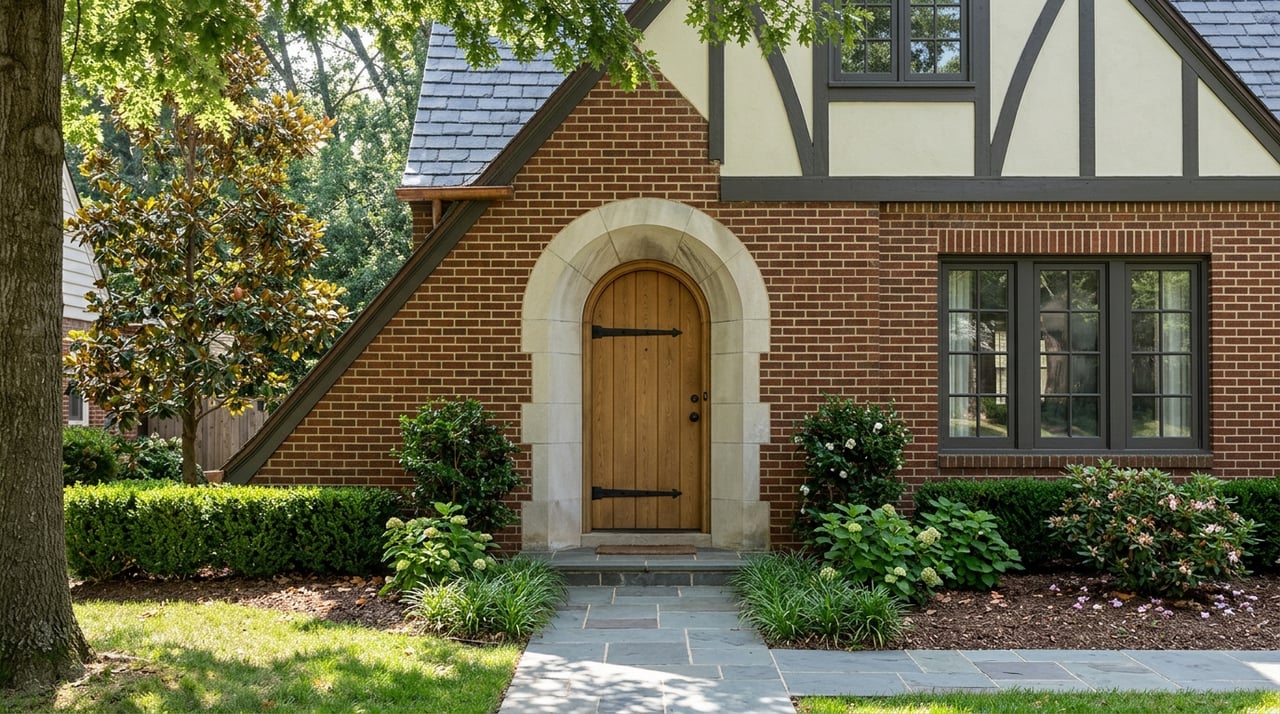
Tudor Revival homes are often recognized by brick veneer, multiple gable fronts, and false half-timbering. In Druid Hills, these features can make a house feel handcrafted, historically specific, and visually memorable. That matters because buyers tend to respond strongly to homes that look authentic rather than generic.
When Tudor details remain intact, the home’s style is easier to read from the street. Rooflines, masonry, and exterior detailing all help create that impression. If those elements have been altered in ways that clash with the original design, the house may lose some of its architectural clarity.
Craftsman Homes
Craftsman homes typically show their character through porch supports, triangular knee braces, exposed rafters, transomed windows, and grouped sash windows. In Druid Hills, these homes often appeal to buyers who want warmth, livability, and period detail without sacrificing charm.
Original porch-and-roof proportions are especially important. When those proportions remain intact, the home tends to feel more cohesive and inviting. That kind of visual balance can strengthen buyer interest because it signals that the house has been cared for with respect for its original character.
Traditional Estates and Manor-Scale Homes
Druid Hills also includes large mansions, neo-manorial estates, and homes designed by some of Atlanta’s best-known architects. These properties often benefit from scale, symmetry, formal entries, generous setbacks, and a strong relationship between the house and its landscape.
In this segment of the market, value is often shaped by composition as much as square footage. Buyers notice how the home sits on the lot, how the front elevation presents itself, and whether the landscape supports the architecture. A well-composed property tends to feel more complete and more premium.
What Research Says About Style and Value
Research supports what many buyers and sellers already sense. A Springer study found statistically and economically significant price differences among architectural styles for existing houses. That does not mean every historic-looking home earns a premium, but it does suggest that style can have measurable market impact.
A Georgia State University study of Atlanta-area historic districts found that National Register listing was associated with 14% to 17% higher property values after listing. At the same time, local-district designation did not show an independent effect once overlap was accounted for. The key takeaway is that market value appears to respond more to authentic character and recognized setting than to a label alone.
For Druid Hills, that matters. A home that clearly expresses its original style may feel more valuable than one that simply carries a historic association without preserving the features buyers expect to see.
Why Authenticity Often Wins
In Druid Hills, authenticity is one of the clearest value signals. Buyers often respond to homes that still read clearly as Tudor, Craftsman, Colonial Revival, or another period style. That usually means original or well-matched materials, consistent roof forms, intact porches, readable massing, and thoughtful exterior updates.
A Tudor with intact masonry and roofline details may feel more compelling than a renovated home with mismatched windows or out-of-place trim. A Craftsman with preserved woodwork and balanced porch proportions may feel more special than a larger house whose character has been diluted. In both cases, the style tells a clearer story.
That story matters in marketing too. When a listing can accurately identify the architectural style and point to original materials or design elements, buyers have a more concrete reason to connect price with value.
Historic Review Can Affect Perceived Value
Druid Hills is divided into nine districts. Most are in unincorporated DeKalb County, while districts 1 and 4 are in the City of Atlanta. In local historic areas, exterior changes require a Certificate of Appropriateness under the applicable county or city rules.
That review framework matters because it helps protect the architectural features and streetscapes that support neighborhood identity. DeKalb’s design standards focus on scale and massing, architectural details, materials, roof forms, and streetscape. Those are many of the same features that shape buyer impressions from the curb and in online photos.
For sellers, this can be part of the value story. If exterior improvements were completed in a way that respects the home’s style and local review standards, that can reinforce buyer confidence. For buyers, it is important to understand that future exterior plans may be subject to review.
Current Market Context in Druid Hills
Recent market data suggests Druid Hills sits near Atlanta’s luxury band. Redfin reported a three-month median sale price of $784,530 in May 2026 and 17 days on market. Zillow’s home value index placed the average home value at $882,551 as of May 31, 2026, up 7.1% year over year, with a median list price of $783,250.
Those numbers point to a strong market, but not a careless one. Redfin also reported that homes were selling about 1% below list price on average and that 31.4% of homes had price drops. That suggests buyers are paying attention and making distinctions between homes that feel fully aligned with neighborhood expectations and those that do not.
At the metro level, the Atlanta REALTORS’ April 2026 Market Brief reported a median sales price of $436,000 and 19 days on market. Realtor.com’s December 2025 luxury report placed the Atlanta metro’s entry-level luxury threshold at $899,663. That puts many Druid Hills homes close enough to the luxury conversation that presentation, architecture, and preservation details can meaningfully affect pricing strategy and buyer response.
What Sellers Should Highlight
If you are selling a home in Druid Hills, generic marketing usually leaves value on the table. Architecture should be part of the positioning from the start, especially in a neighborhood where style and setting are central to buyer perception.
Focus on the details that support authenticity and design continuity:
- Original or well-preserved windows
- Masonry and exterior materials
- Rooflines and gable forms
- Porch details and proportions
- Documented renovation history
- Exterior updates that respect the home’s architectural style
- The relationship between the home, the lot, and the surrounding landscape
This is where curated presentation matters. Professional photography, thoughtful staging, and precise listing language can help buyers see not just the home’s features, but also why those features belong in Druid Hills and why they support value.
What Buyers Should Evaluate
If you are buying in Druid Hills, square footage is only part of the picture. A smart evaluation also looks at how well the home expresses its original style and how comfortably it fits its site.
Here are a few practical questions to ask:
- Does the architecture read clearly from the street?
- Are key exterior elements intact or thoughtfully updated?
- Does the home sit well on the lot with the right visual balance?
- Do the landscaping and setbacks support the house’s design?
- Will any planned exterior changes require Certificate of Appropriateness review?
In a neighborhood like Druid Hills, value often comes from the complete composition. Interior updates matter, of course, but buyers should also pay close attention to what cannot be easily recreated: the original design language, the lot relationship, and the surrounding streetscape.
The Bottom Line on Druid Hills Value
In Druid Hills, architecture shapes home value because it shapes perception, scarcity, and buyer confidence. The neighborhood’s Olmsted plan, traditional housing stock, and historic review framework all reinforce the idea that design integrity matters here.
That does not mean every older home commands a premium automatically. It means homes that preserve their style, respect their setting, and present a clear architectural identity are often better positioned to stand out. In a market where buyers are selective, those details can make a real difference.
If you are preparing to buy or sell an architecturally notable home and want a more thoughtful strategy around presentation, pricing, and market positioning, Neil Hediger Real Estate can help you tell the right story.
FAQs
How does architecture affect home value in Druid Hills?
- In Druid Hills, architecture affects value because buyers respond to authentic style, preserved details, and the home’s relationship to the neighborhood’s planned landscape and streetscape.
Which architectural styles are common in Druid Hills?
- Common styles in Druid Hills include Georgian Revival, Tudor Revival, Classical Revival, Colonial Revival, Spanish Colonial Revival, Beaux-Arts, and Craftsman.
Do historic designations automatically raise Druid Hills home values?
- Research cited for Atlanta-area historic districts suggests value is more closely tied to recognized setting and authentic architectural character than to a historic label alone.
What exterior features matter most to Druid Hills buyers?
- Buyers often notice windows, masonry, rooflines, porches, massing, materials, and how well the home’s exterior details match its original architectural style.
Do exterior changes in Druid Hills require approval?
- In local historic areas of Druid Hills, exterior changes require a Certificate of Appropriateness under the applicable DeKalb County or City of Atlanta rules.
What should sellers emphasize when listing a Druid Hills home?
- Sellers should highlight the home’s architectural style, original or well-preserved features, documented renovations, and updates that respect the property’s period character and setting.