Leafy streets, gracious lawns, and timeless facades make Druid Hills feel like a living architecture museum. If you are drawn to classic design and thoughtful planning, this neighborhood rewards a closer look. In this guide, you will learn how to spot the styles that define Druid Hills, how these homes live day to day, what updates buyers often consider, and how local preservation shapes smart renovations. Let’s dive in.
Why Druid Hills looks this way
Druid Hills was planned as a garden suburb by Frederick Law Olmsted, with curving, park-like streets and green parkways that frame the homes you see today. The result is a neighborhood where architecture and landscape work together to create a calm, walkable setting. You can read more about the plan’s origins in the National Park Service overview of Druid Hills.
According to the National Register nomination, the district spans roughly 1,300 acres and about 1,300 properties, with lots ranging from several acres down to one-third to one-half acre. Typical frontages run 60 to 150 feet, with depths of 200 feet to nearly 1,000 feet. These patterns still shape siting, light, and the potential for discreet rear additions today. Explore the full context in the National Register nomination.
The parkway system and mature tree canopy are central to the neighborhood’s identity. Home siting, deep setbacks, and generous lawns were intentional, which is why many homes feel framed by green space. For a deeper look at the landscape legacy, the Olmsted Network’s feature on Olmsted Linear Park is a helpful read.
Tudor Revival
Quick ID
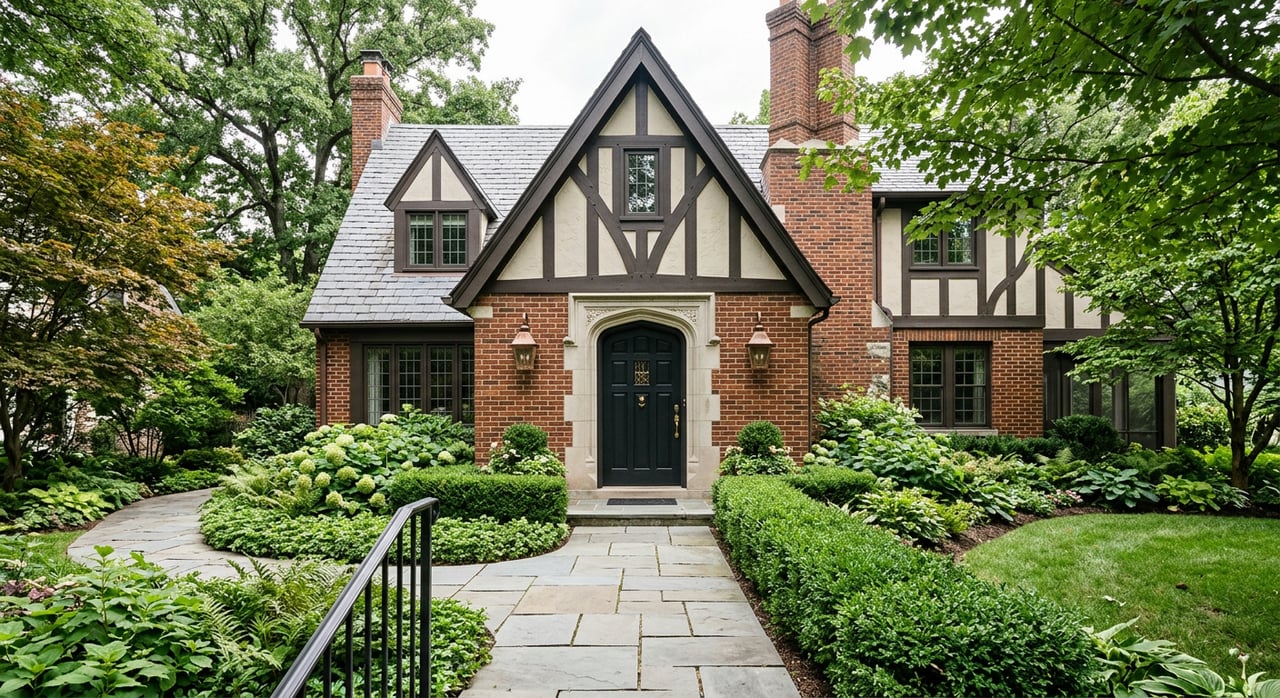
- Steep, multi-gabled roofs and tall chimneys.
- Patterned brick or stone with decorative half-timbering.
- Grouped casement windows, sometimes with leaded or diamond panes. See a concise primer on Tudor hallmarks in this style overview.
How it lives
- Interiors feel warm and intimate, with nooks, beams, and prominent fireplaces.
- Windows under deep eaves can create moodier light than other styles.
- Upper floors often tuck under rooflines, adding character with some sloped ceilings.
Typical updates buyers explore
- Enlarge kitchens or add a rear family room to improve flow.
- Weatherize or restore original casement windows; consider storm panels for comfort.
- Monitor intersecting gables and flashing details during inspections.
A beloved local example of the Tudor and Gothic vocabulary at mansion scale is the Callanwolde Fine Arts Center.
Georgian and Colonial Revival
Quick ID
- Formal symmetry with brick or masonry facades.
- Centered entry with classical detailing and a balanced window rhythm.
- High-style versions may have side wings or a pedimented central pavilion.
How it lives
- Central-hall or double-pile plans organize elegant, practical circulation.
- Even daylight through regularly spaced double-hung windows.
- Generous ceiling heights create an airy, formal tone in principal rooms.
Typical updates buyers explore
- Rear or side expansions to create open kitchens and family spaces.
- En-suite bathroom additions that respect the original layout.
- Restoration of millwork and trim that photographs beautifully when done well.
Mediterranean, Italian Renaissance, and Spanish Revival
Quick ID
- Stucco walls and red clay tile roofs.
- Arched openings with loggias, arcades, and courtyards.
- Terra-cotta or stone accents for refined texture. For broader context, see the NPS overview of historic architectural styles.
How it lives
- Strong indoor-outdoor connection through terraces and arcaded porches.
- French doors and arched windows bring generous daylight into public rooms.
- Courtyards and small garden rooms extend daily living spaces.
Typical updates buyers explore
- Stucco repair and careful waterproofing.
- Restoration of historic doors and windows for performance and longevity.
- Landscape updates to make loggias and courtyards usable year-round.
Arts & Crafts and Craftsman Bungalows
Quick ID
- Low-pitched gable roofs with wide eaves and exposed rafters.
- Tapered porch columns on masonry piers.
- Wood siding or shingles with a focus on natural materials and craftsmanship.
How it lives
- Built-ins, window seats, and fireplace mantels add warmth and utility.
- Open yet human-scale living, dining, and kitchen relationships.
- Adaptable to modern life after a thoughtful kitchen and bath refresh.
Typical updates buyers explore
- Light-touch kitchen upgrades that preserve period character.
- Insulation improvements and careful window repair for comfort.
- Restoration of porch elements that define curb appeal.
Neoclassical and Beaux-Arts
Quick ID
- Temple-like porticoes and classical columns.
- Strong symmetry, axial entries, and formal massing.
- Grand curb presence that anchors streetscapes. See an overview in SAH Archipedia.
How it lives
- Formal room sequences with generous volumes and tall windows.
- Ample daylight in principal rooms and grand entertaining spaces.
- Higher maintenance needs that reward careful restoration.
Mid-century, Ranch, and Postwar Infill
What you will see
- Smaller, later homes found in pockets near the district’s edges.
- One-level living, larger picture windows, and simpler plans.
- Documentation of these patterns appears in the National Register nomination.
How it lives
- Easy circulation and indoor-outdoor flow.
- Often lower ceilings than earlier revival houses but practical layouts.
- Common updates include kitchen and bath modernization and energy upgrades.
Preservation, permits, and smart renovations
Druid Hills includes National Register landscapes and residential districts, but local rules govern what you can change on many properties. Exterior changes visible from the street usually require design review, while interior updates typically do not. Jurisdiction matters because rules differ between unincorporated DeKalb County, the City of Atlanta, and Decatur. Start with DeKalb’s Historic Preservation resources, including the Druid Hills Design Manual, on the county’s preservation page.
What this means for you
- Expect review for exterior materials, rooflines, porches, and visible driveways or parking.
- Rear additions that preserve the historic front are commonly favored.
- Tree canopy is part of the district’s character, so major landscape changes may be reviewed.
Systems and inspections
Historic houses are rewarding, and they benefit from knowledgeable inspections. Many buyers bring in specialists for masonry, historic windows, and older wiring, along with a standard home inspection. For a practical checklist on older homes, see this guide from This Old House.
What buyers prioritize today
Recent buyer-preference research highlights functional kitchens, outdoor living, storage and laundry, and options for single-level living. These goals can align well with Druid Hills through sensitive additions, finished terraces, and reworked service spaces at the rear. Read the latest summary from the NAHB on what home buyers want.
How to spot, shop, and stage by style
Use these quick cues and tips to make the most of your search or sale.
- Tudor: Look for steep gables, grouped casement windows, and rich textures. Expect cozier rooms and highlight fireplaces and beam details in listing photography.
- Georgian and Colonial Revival: Symmetry and a central hall set the tone. Emphasize even daylight, restored millwork, and gracious formal rooms.
- Mediterranean and Italian Renaissance: Focus on arched openings and outdoor rooms. Stage terraces and loggias to show year-round living potential.
- Craftsman: Spotlight built-ins, porch columns, and warm woodwork. A fresh kitchen and preserved details go a long way with buyers.
- Mid-century and Ranch: Lean into single-level convenience and clean lines. Open the kitchen and refresh baths to maximize appeal.
Ready to explore Druid Hills?
Whether you are buying a character-rich bungalow or preparing a grand revival home for market, a tailored plan makes the difference. From premium photography and curated staging to Compass-enabled improvements, you deserve advice that blends design insight with local know-how. If you want a personalized plan for your next move in Druid Hills, connect with Neil Hediger Real Estate. Discover your home’s curated potential — Let’s talk.
FAQs
What makes Druid Hills architecture unique?
- The neighborhood’s Olmsted-planned parkways, deep setbacks, and mature canopy create a cohesive backdrop for early 20th-century revival homes and bungalows.
Are exterior changes reviewed in Druid Hills?
- Many properties are subject to local design review for visible exterior changes. Interior updates typically are not reviewed. Always verify which jurisdiction applies to your address.
Can I add a rear family room or larger kitchen?
- Often yes, when additions are sensitively massed at the rear and preserve the home’s historic front. The district design manual outlines compatible approaches.
How do Tudor homes compare to Craftsman bungalows day to day?
- Tudors feel cozier with compartmentalized rooms and moodier light, while Craftsman bungalows offer more flowing, human-scale spaces with built-ins.
Are single-level homes available in Druid Hills?
- Yes. Pockets of postwar ranch and mid-century homes offer one-level living and simpler plans, often near the district’s edges.
What inspections should I plan for with an older home?
- In addition to a standard home inspection, plan for specialists in historic windows, roofing, masonry, and older electrical systems to avoid surprises.